
Create a Wallet
Start with account control and addresses before choosing whether to create or import.
Open guide →imtoken Multi-chain Wallet
A multi-chain wallet, blockchain network and Web3 knowledge hub from imtoken
Move from multi-chain asset viewing and network selection to sending, receiving, DApp connections, token approvals and network fundamentals. imtoken focuses on making each action understandable against verifiable on-chain information, with clear reminders to review addresses, networks and requests and to keep seed phrases and private keys under your own control.
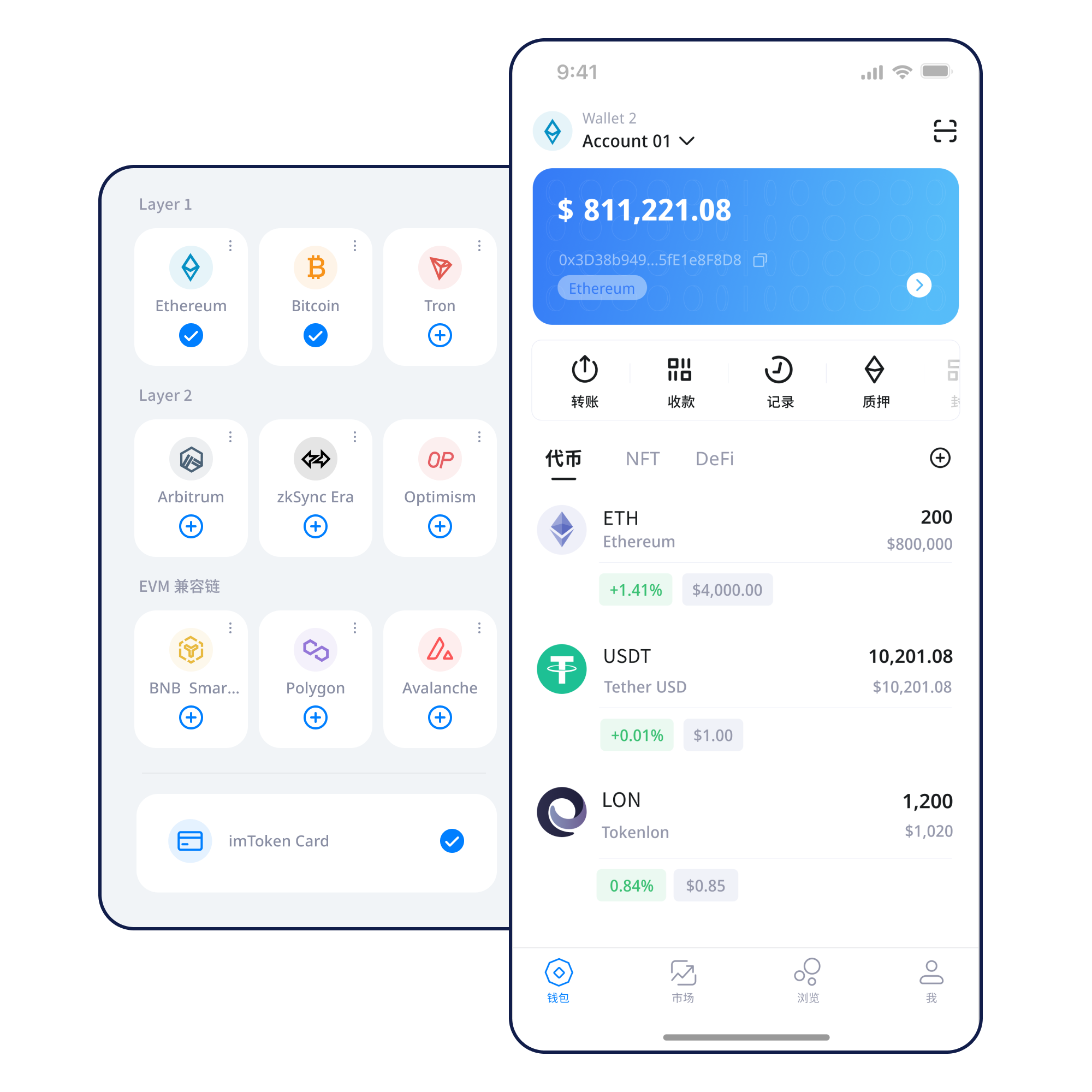
Start with account control and addresses before choosing whether to create or import.
Open guide →Keep seed phrases offline and do not transmit them through chats, email or untrusted cloud storage.
Open guide →Verify the receiving address and network, and make sure the sender uses the same network.
Open guide →Review the address, network, amount and gas before submission, then keep the transaction hash.
Open guide →Verify the domain and request origin, and review every signature and approval separately.
Open guide →Assets, networks, transactions, DApps and security are connected. Understanding those relationships supports better checks in every workflow.
Multi-chain assets
A token name can appear on more than one network, and similar address formats do not mean the networks are the same. Review the network, token contract and confirmations together.
Send & receive
Confirm address and network when receiving; review amount and gas when sending. After submission, use the transaction hash to verify broadcast, block inclusion and confirmations.
Wallet security
Seed phrases and private keys should remain under the user’s control and be backed up offline. Official staff will never ask for these secrets or verification codes.
imtoken APP
When managing networks, viewing assets or checking transaction history on mobile, use verifiable on-chain state as the final reference.
Explore the app →imtoken Web
Browser connections should start from a trusted domain. After connecting, continue to review account requests, signatures, approvals and contract interactions individually.
Learn web connections →Do not memorize names alone. Connect addresses, gas, block height, confirmations and explorers into one model.
Assets and addresses must be reviewed separately on every network.
Before switching networks, confirm where the asset actually exists. For cross-network or cross-layer movement, review the bridge path and settlement conditions.
Nodes, blocks and confirmations create verifiable on-chain records.
Before switching networks, confirm where the asset actually exists. For cross-network or cross-layer movement, review the bridge path and settlement conditions.
EVM networks share an execution model while gas, contracts and state remain network-specific.
Before switching networks, confirm where the asset actually exists. For cross-network or cross-layer movement, review the bridge path and settlement conditions.
Understand mainnet relationships, bridges and cross-layer settlement.
Before switching networks, confirm where the asset actually exists. For cross-network or cross-layer movement, review the bridge path and settlement conditions.
Fees and confirmation time change with network conditions.
Before switching networks, confirm where the asset actually exists. For cross-network or cross-layer movement, review the bridge path and settlement conditions.
Each step should leave information you can verify rather than relying on memory or appearance.
Use a trusted official source and avoid downloads offered through unknown ads or chat links.
Understand account control and recovery before creating a new wallet or importing an existing one.
Keep the seed phrase offline and never disclose private keys or verification codes.
Confirm the asset, counterparty and current action all use the intended network.
Review address, network, amount and gas; consider a small test when appropriate.
Keep transaction hashes and periodically review DApp connections and approvals you no longer need.
Web3 & DApp
Connecting a wallet does not mean every later request should be approved. Review each signature and approval independently.
Open the Web3 guide →Security
Wallet security includes key custody, device hygiene, DApp approvals and transaction review. Users remain responsible for seed phrases and private keys, and official staff will never request them. Confirmed on-chain transactions generally cannot be reversed unilaterally by a wallet, and third-party DApps and smart contracts can carry risk. Review origin, network, address, amount and permission scope before acting; avoid sensitive actions on shared devices or untrusted networks and consider revoking approvals that are no longer needed.
Open Security Center →Start with the basics of wallets and build toward networks, transactions, Web3 and security.
Featured guide
Start by separating addresses from seed phrases and private keys, then learn networks, gas, transaction hashes, DApps and approvals. Addresses identify accounts; seed phrases and private keys represent control; networks determine where the state exists; gas affects execution cost; and transaction hashes let you verify results. A DApp connection also introduces signatures and approvals that should be treated as separate security decisions.
Start learning →How nodes, blocks and confirmations create verifiable records
How addresses, gas, tokens and contract execution relate
Mainnet, bridges and cross-layer settlement
Targets, allowances and revocation
Keys, devices, phishing and transaction checks
Clear definitions for common terms
Staking information should explain mechanics and risk before discussing participation.
Ethereum Staking
Ethereum PoS uses validators to participate in consensus. Reward sources, network state, withdrawals and exit mechanics can all affect outcomes.
Read the basics →Before participating
Staking does not guarantee returns. Rewards can change, exits may take time, validators can face protocol penalties, smart contracts and third-party services can introduce technical risk, and digital-asset prices can fluctuate.
Learn about validators →No fabricated dates, partnerships, funding, licenses or user metrics—only product and security information that can be stated without invented claims.
Ongoing explanations of wallet and asset workflows.
Verify the destination network and settlement rules before switching or bridging.
Never send a seed phrase, private key or verification code to anyone.
Review rules and risk information before using a third-party service.
Clarify the concept before deciding the next step.
A wallet primarily manages the keys used to sign for and control on-chain accounts, while reading balances and activity from blockchain networks. The asset records exist on-chain rather than simply inside the app interface.
A private key directly controls an account. A seed phrase is commonly used to derive a set of private keys and addresses. Both are highly sensitive and should never be shared or entered into an untrusted website.
Many EVM networks use compatible address formats, so the same private key can map to the same-looking address. The balances, gas assets and token contracts on each network remain separate, so the network must still be checked.
Gas is the accounting unit for computational resources used by transactions and smart-contract operations. Actual fees depend on network rules, transaction complexity and congestion.
A transaction hash is a key identifier for looking up an on-chain transaction. On the relevant block explorer it can show broadcast, block inclusion, confirmations and failure information.
Once a transaction is confirmed by the network, it generally cannot be unilaterally reversed by a wallet. Review the address, network, amount and action before submitting.
A connection usually lets a DApp request account information or initiate later requests. A later signature, approval or transaction can have effects, so every request should be reviewed separately.
Use the dedicated download page for imtoken and review the security and backup guides first.